A guide for downtown Denver hotel teams
Downtown Denver hotel room odor, treated at the source
A king room that smells of a weekend smoker can sit out of order for days. This guide shows where the odor settles in a guest room, what has to be treated or replaced, and how housekeeping, engineering and the front desk get the room sold again.
Treat the carpet, drapes, mattress and wall unit that hold the smell. Fragrance only hides it until the next guest turns on the air.
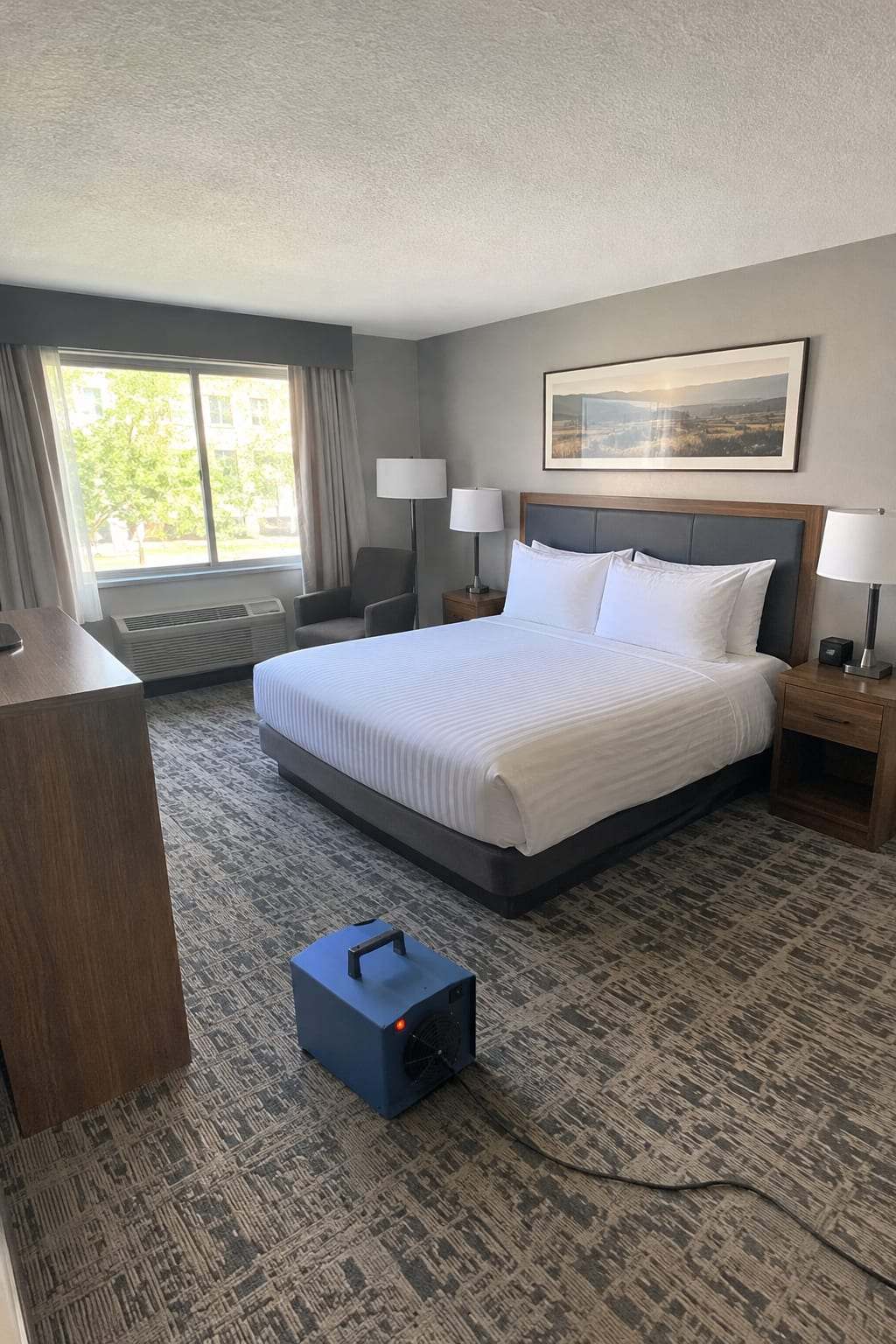
An odor room stays off the board every night it smells
A guest smokes in a non-smoking king, empties a pepper spray canister in a suite, or cooks with the kitchenette fan off. Housekeeping strips the bed and runs the vacuum, and the room still smells. Residue has settled into carpet, drapes, upholstery, the mattress and the wall unit, and the next guest smells it within a minute of opening the door.
Handle it as a room-return job. Find every source, treat or replace the soft goods that hold it, clean the air unit, and use a controlled whole-room treatment when the room is empty. Then the front desk gets a release time it can trust.
Where the smell lives in a guest room
Housekeeping clears what it can see. These five places hold what it can't.
- Bed, carpet and drapesCigarette and cannabis smoke in rooms booked as non-smoking.
- The whole room's airPepper spray or bear spray discharged inside the room.
- The PTAC under the windowOdor held in the PTAC coil, filter and blower.
- The kitchenetteCooking odor in suites with a kitchenette.
- An old leak by the bathMusty air in rooms with an old leak or poor circulation.
From out of order to back in inventory
Five steps, planned with engineering and housekeeping before anyone opens a door.
-
Step 1 of 5
Assess
Name the odor and find every material and system holding it, from the carpet pad to the PTAC coil.
-
Step 2 of 5
Scope
Agree in writing on what gets treated, what gets replaced, and the night the room should come back.
-
Step 3 of 5
Treat the sources
Clean carpet, upholstery and hard surfaces, and service the air unit and its filter.
-
Step 4 of 5
Treat the whole room
Run a controlled treatment in the empty room when the odor calls for it, then ventilate.
-
Step 5 of 5
Release
Housekeeping makes the room up and the front desk puts it back on sale.
Spas and salons hold odor the way guest rooms do
Treatment rooms, salons and suites share the same trouble: soft surfaces, a closed door and air that recirculates. The same source-first approach applies to each of them.
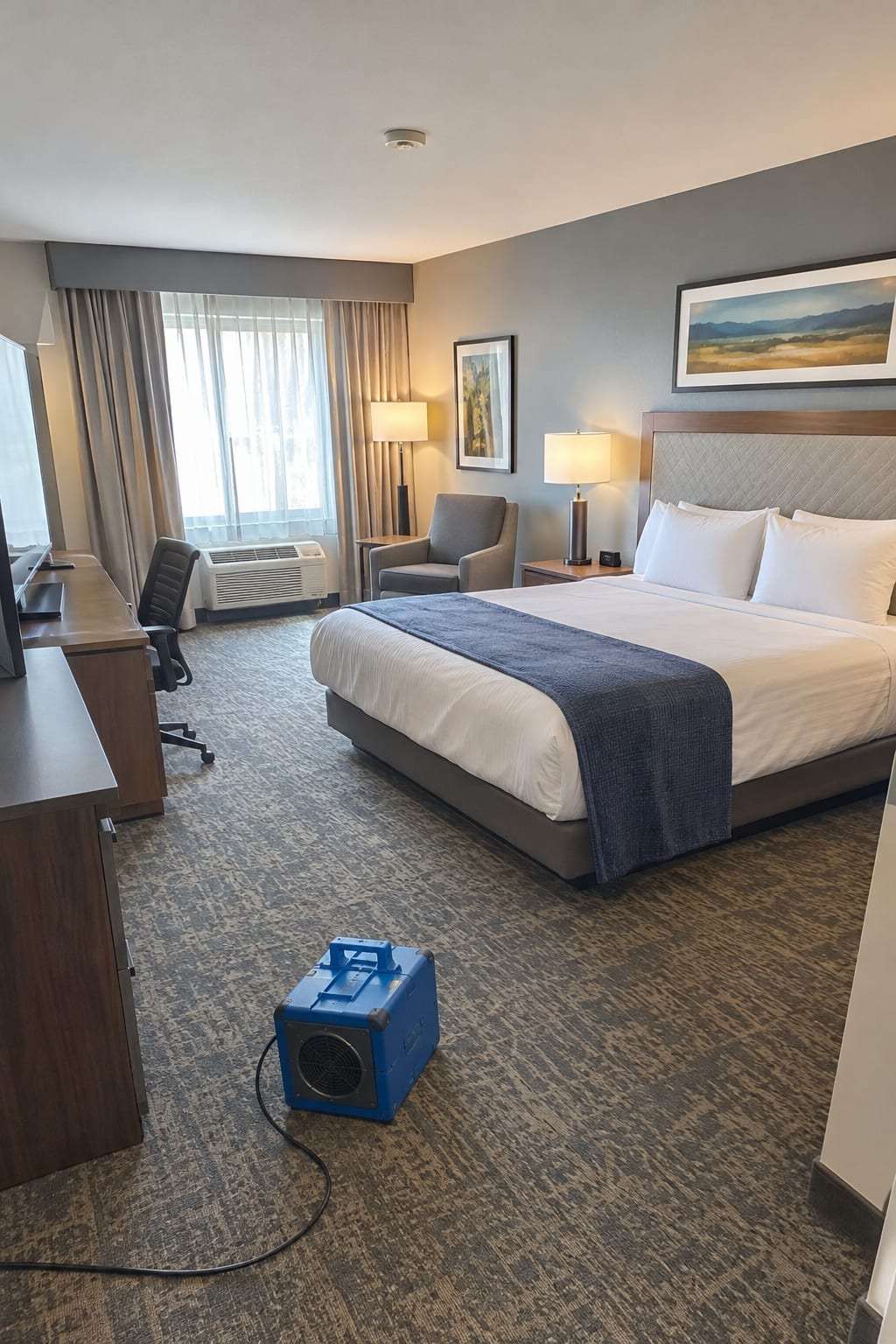
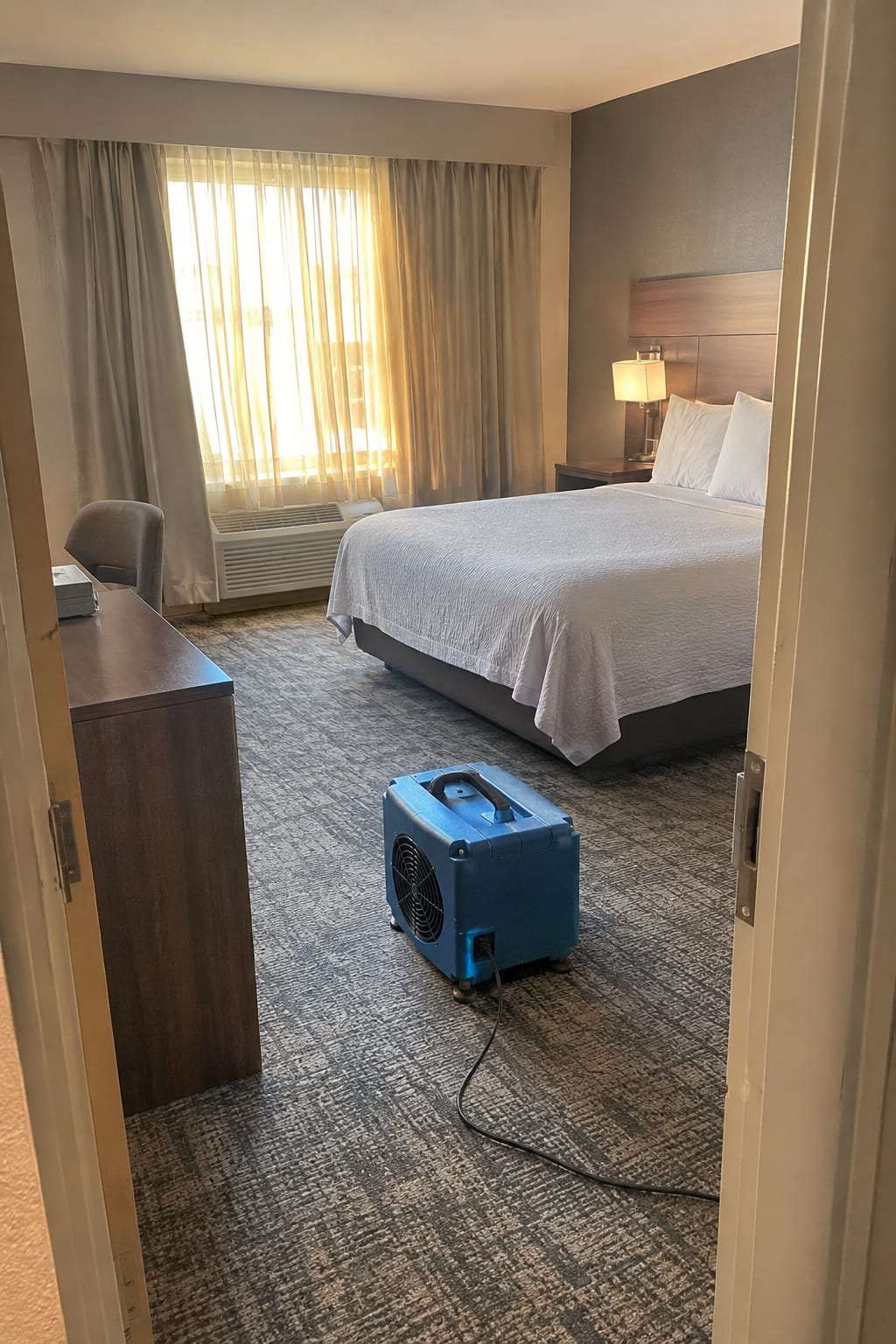
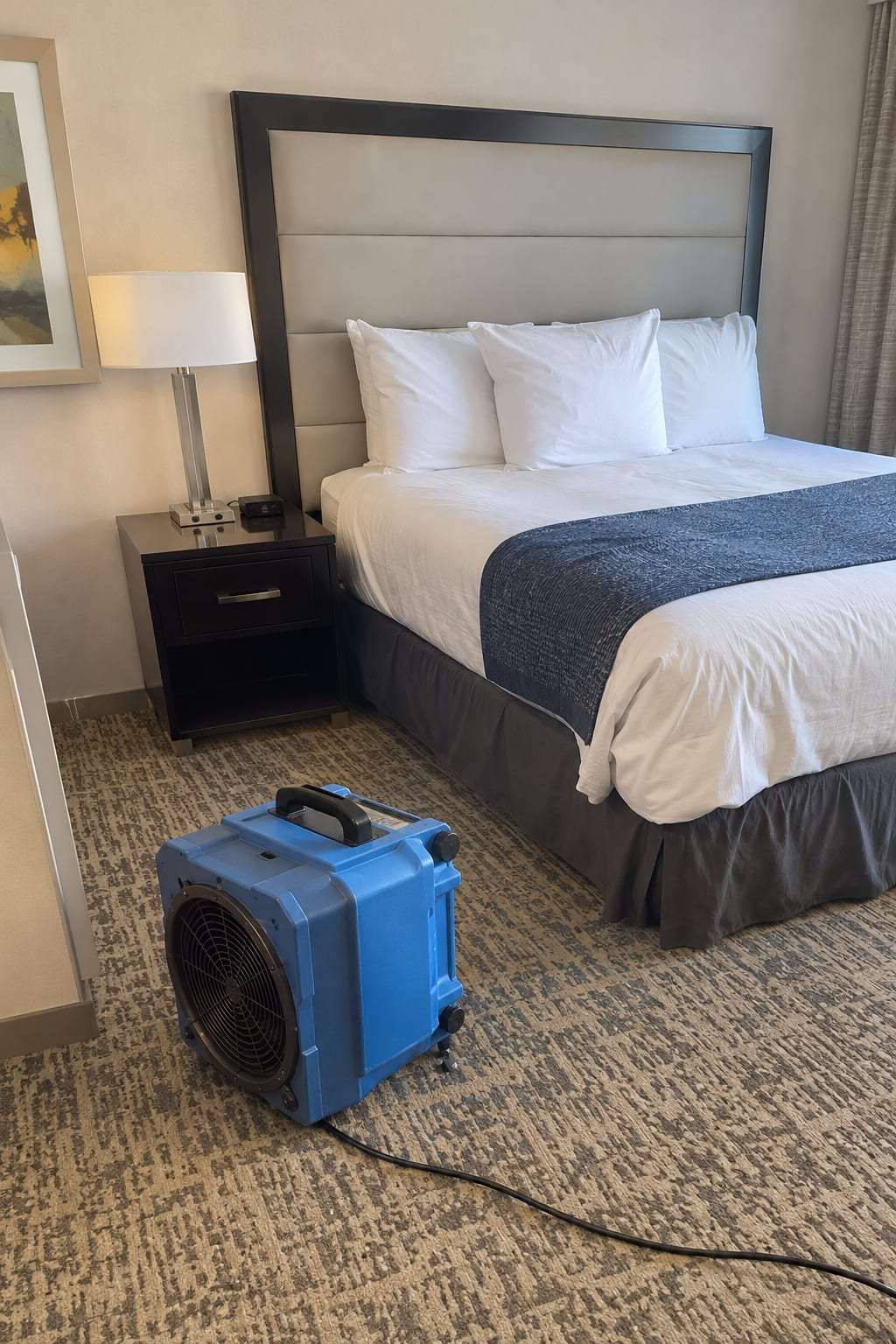
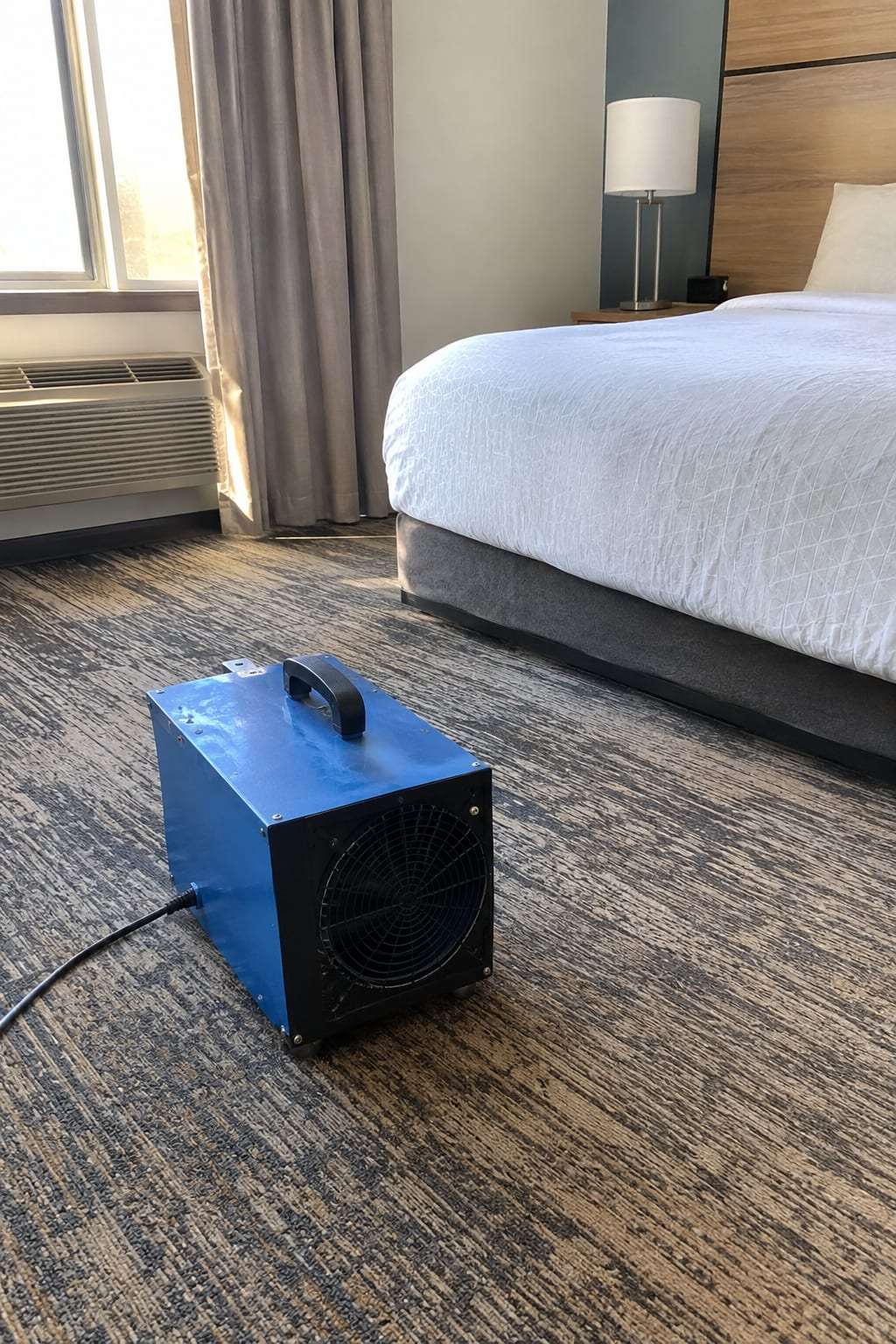
The first hour after checkout
- Put the room out of order. Re-renting it with a lingering smell turns one problem into a refund and a review.
- Photograph the room and note what you smell before anything is moved, if your property charges a smoking fee.
- Pull the linens for laundry. Leave the drapes, upholstery and mattress where they are until someone assesses them.
- List the room numbers and the night you need them back before you contact anyone about treatment.
Guests stay out until the room is released
A treated room stays empty and posted, adjoining doors stay shut, and the front desk gets a clear time the room can be sold again. If spray is making staff cough, they leave, close the door and air the room from outside. Anyone with trouble breathing should get medical help.
Four departments, one room
Odor rooms come back fastest when each team knows its part before the room goes out of order.
Front desk
Takes the room off sale and knows the night it is expected back.
Housekeeping
Pulls linens first and flags odor at checkout, before the room is made up again.
Engineering
Opens up the PTAC or room air unit and knows how the room's air reaches the corridor.
Management
Keeps the photos and notes from the assessment if the property charges a smoking fee.
ZIP codes served: 80202 (Denver), 80203 (Denver), 80218 (Denver), 80204 (Denver), 80205 (Denver), 80211 (Denver).
Also nearby: 80206, 80209, 80216, 80212, 80223, 80214, 80207, 80220, 80219, 80246, 80221.
What changes in downtown Denver
Downtown Denver hotels run from converted brick buildings near Union Station and in LoDo to convention and business towers near the Colorado Convention Center and along the 16th Street corridor. Conventions, games and tourism fill them, so an out-of-order room on a sold-out night costs real money.
Colorado allows recreational cannabis but not public consumption, so guests often smoke in their rooms. Cannabis odor sits beside tobacco smoke and irritant sprays on most downtown housekeeping logs.
- Most downtown hotels sit around Union Station, LoDo, the Convention Center and the 16th Street corridor.
- Book treatment around engineering, security and housekeeping schedules, not just an open room.
- Give room counts and the nights you need them back when you ask for any quote.
- Hotels in Cherry Creek and Capitol Hill log the same smoke and cannabis complaints.
Guides, tools and worksheets
Room downtime, PTACs, fee records and event weeks, written for general managers, housekeeping leads and engineering.
Odor Problems18
- Recovering a non-smoking room after a guest smoked in it
- When the PTAC is the reason a guest room still smells
- Fan coil units, risers and the odors they carry in tower hotels
How soon can a room go back into inventory?
It depends on the odor and the treatment. Many rooms are treated and aired within a day or two. Ask for a return date in writing with the quote.
Can mattresses and upholstery be treated?
Often, yes. Heavily contaminated pieces may cost less to replace than to treat twice, and a good assessment says which.
Should the PTAC be treated too?
Yes. The wall unit, its filter and its air path belong in every assessment, because they hold odor and push it back into the room.
Will treatment bother guests in the next rooms?
Treatment belongs in vacant rooms with the doors closed and the adjoining doors sealed, and you can time it around occupancy.
Will the next guest smell a cover scent?
They should not. Ask whether synthetic fragrance or an ozone generator is part of the plan. The goal is a room that smells of nothing when housekeeping releases it.
Is a standing arrangement for future rooms worth it?
For properties that see odor rooms every month, ask about ongoing service when you request quotes.
How is a PTAC handled during treatment?
The wall unit under the window pulls room air across a coil and a filter, and both hold odor. Engineering replaces the filter, the coil and blower get cleaned, and the unit is treated with the room. Skip it and the smell returns the first time a guest turns on the air.
A room out of order for odor tonight?
Put it out of order, photograph it and pull the linens. If spray is irritating staff, close the door and air the room from outside. Then choose a provider you have checked yourself and get a written scope for each room.
What a first conversation usually covers
A careful provider asks about the property, the rooms and odors involved, and how soon the rooms need to come back. Ask for a site visit and a written scope with a timeline before you agree to anything.
Describe the rooms
This form is not connected. This website is a draft preview: no business has been confirmed to receive requests, so the fields below are switched off and nothing can be sent. In an emergency, call 911.